This semester in International Politics, my group's blog was on the economic crisis in Europe, specifically the issue in Greece. We learned the timeline that the crisis took place, and the factors that made it disastrous. We then started studying deeper into the chaos in Greece, looking at specific issues and problems, such as corruption of public officials, and poor decision making from the government officials.
Our group was divided into turns of who would write that week's blog post. Since people had other priorities sometimes we would generously take someones week if they had something to do. However, some people took advantage of that generosity and abused it, and some of our group members did not contribute anything, nor did it seem like they were interested in helping. We would ask one another what topic we did for that week, and try to avoid doing the same one over again. In the end I think (those who did work) did a very good informative job of making the blog posts.
I've learned a great deal about the economic crisis in Greece, while I I may not be able to understand what Wall St. tells me, I was able to find articles that were able to break down the complicated economic terms into understandable layman ones. I also learned that people should also not be trusted by their word, because most of the time they will let you down.
Showing posts with label greekdebt. Show all posts
Showing posts with label greekdebt. Show all posts
Saturday, December 7, 2013

Friday, December 6, 2013
Final entry: EU Crisis, Greece, Alkisti Karabelas

Thoughout this semester, as a group, we studied the
EU crisis and we focus on the Greek economy. We started our posts by talking
how the economic crisis started and how it evolved in Greece. We researched
various current topics that occurred over the last months in Greece and we
analyzed how these affected the Greek people. Moreover we researched if there has been any
improvement in the economic situation of Greece and we wrote about areas of
development.
Our plan of collaboration in the
weekly posts was, for 2 or 3 people to meet every week and do the post together
and then post it on blackboard so we can all agree that the post adequate to be
posted on the blog. Of course most of the times our plans didn’t work out as members
of our group were irresponsible and did not meet the deadlines. Furthermore it was a very often phenomenon that
a member would not show up on the meetings with the result the other member
having to do all the work by his/her own.
I think that group projects are really hard to succeed in college level
as people do not yet understand that in our lives later if you do not present
adequate work or do not show up on meeting you are most likely to be fired. Our group unfortunately was not able to
collaborate ( at least 2 out of the 5 members) due to lack of interest and
maturity. An example of the lack of the
maturity was when one member offended another’s member’s work, or when another member
would not show up on meetings, not even once, in the whole semester.
At
the end I think the some members managed to collaborate effectively and present
various different topics of the economic crisis. I learn a lot from this group project as far as the economic
crisis but most importantly I learned how the present those issues in a blog
format with supporting resources. It was
a difficult and challenging semester but at the end I think we all learnt the precious lesson of how to collaborate and how
to dissolve issues and problems.
Final Blog Post
Throughout
the fall semester, my group was in charge of tracking and covering the European
Financial Crisis, specifically in Greece. We mainly covered how the economic
crisis was affecting the citizens of Greece and what actions the leaders and
politicians were taking in order to reestablish stability for the country. Furthermore,
as a group we also followed quantitative facts and updates to observe if there
were any positive improvements in the financial crisis. We attempted to track
and form a pattern of advancement from the previous years. Lastly, with the
information we found through researching, I tried to form my own opinions and
stance of how the European Financial Crisis in Greece will shape up to look
like in the future.
 The
research and collaboration for each week’s post did not go as well as I had
planned or expected. I always had an idea that group projects can either go
well or be a complete disaster. Members of the group were not able to meet up
at the same time or place every week so we split it up so two or three members
were designated to work on that week’s blog post. Problems and tension soon
arose between group members because some members were not posting blog posts in
time or at all. Working as a group definitely influenced our approach to this
project because some members wanted to research more about how corruption
within the Greek politics was affecting the EU crisis and others wanted to
focus more and approach this project on how it was affecting people on a global
scale. However, at the end, working in a group did benefit us because we were
able to take many different approaches in order to make better, more
interesting blog posts. For each week's post, I did research on the current events of that week and then chose the most interesting or the event that popped up the most to analyze. I used BBC, other European news sources, and twitter.
The
research and collaboration for each week’s post did not go as well as I had
planned or expected. I always had an idea that group projects can either go
well or be a complete disaster. Members of the group were not able to meet up
at the same time or place every week so we split it up so two or three members
were designated to work on that week’s blog post. Problems and tension soon
arose between group members because some members were not posting blog posts in
time or at all. Working as a group definitely influenced our approach to this
project because some members wanted to research more about how corruption
within the Greek politics was affecting the EU crisis and others wanted to
focus more and approach this project on how it was affecting people on a global
scale. However, at the end, working in a group did benefit us because we were
able to take many different approaches in order to make better, more
interesting blog posts. For each week's post, I did research on the current events of that week and then chose the most interesting or the event that popped up the most to analyze. I used BBC, other European news sources, and twitter.
I
not only learned a great amount of information about the European Financial
Crisis in Greece, but I also learned a lot about working in a group. At the
beginning of the semester, I chose this topic because I have always loved
traveling to Europe and so I wanted to learn more about how the European
financial crisis is affecting the people living there and if there are any effects,
it might have on tourism. I learned a lot about the continuous, yet slow
recovery process of the EU crisis in Greece as they are constantly asking the
IMF and EU for loans in order to pay back their debts. I learned that previous
politicians were corrupt and have caused stress between the citizens and the government.
As far as what I learned about working in a group, I was reminded how huge of a
challenge it is to evenly split the amount of work and effort between group members.
Something I did not expect and made me uncomfortable was when a group member
criticized my work and effort. I thought working together in a group was to
learn how to help each other work to each of our best abilities and not
question or demote a student’s competence.
Friday, November 8, 2013
Rallies and Riots Against the IMF and EU Economic Leaders in Greece.
 Earlier this week, IMF and EU economic inspectors weren't greeted with open arms and smiles. Instead they were greeted with fists, and scowls. Riot police had to push back anti-austerity protesters to let the inspectors pass through to their vehicles. Demonstrators screamed slogans such as "take your bailout and get out of here!" The IMF's chief inspector to the Greek Crisis, had to duck and dodge as a man through coins at him. The protests grew in ferocity as some IMF inspectors had to be snuck out the back door. This will be the sixth year that Greece has been in a recession, with unemployment creeping towards 30%. Demonstrators that took to the streets were angry after more public sector funds had been dismissed after "the troika" had stated that the funds needed to be allocated elsewhere. Greeks have lost nearly 40% of their disposable income, possibly making this generation a lost cause. With no money towards leisure, most Greeks have to save their money just to live. But the quality of living isn't even that good anymore. The officals in Athens state that structural reforms, and "targeted measures" could easily seal the €500m. However the IMF, EU, and European Central Bank contend that the debt is in fact four times larger, and can only be resoled with more budget cuts and austerity measures.
Smith, Helena . "Greek protesters rally against IMF and EU inspection." the Guardian. N.p., n.d. Web. 8 Nov. 2013. <http://www.theguardian.com/world/2013/nov/05/greek-protesters-rally-against-imf-eu-inspection>.
Friday, October 25, 2013
The Greek economy is predicted to recover in 2014, but...
Summary The Greek national budget for 2014 predicts a slight surplus, but critics believe that it is too optimistic and that the country is still far from an economic recovery.

Now that the Greek crisis is showing slight improvements, the IMF and EU will be more open to the possibility of giving further aid and debt relief. However, there are several criticism about the 2014 budget which may derail Greece's plan and hope for 2014. First of all, the pension fund deficit is predicted to be higher than first assumed, while tax revenues might be lower than first expected, efficiently eating up the tiny surplus (about 340 million euro) that the Greek expected to have and more. Even if these factors were not present, there are serious doubts that Greece will ever be able to pay back its debt completely due to the sheer size of it.
Also, an article in International Business Times from September 30th shows how retail sales decreased in July 2013. This was most likely a reflection of the fact that wages for employed greeks (there is still a 27% unemployment rate) have decreased by 7.5%, giving them even less spending power than they already have. As shown in other recessions, an important aspect of recovering an economy is to stimulate the economy by putting money back into hospitality and retail.
As previously mentioned, a part of the predicted economic growth will be through tourism. However, tourism is an industry that is very sensitive to outside factors such as climate, political stability and trends. It also peaks during summer months, so predictions are hard to make since summers aren't necessarily an indication of how a country will be for the rest of the year. This summer, the political unrest in Northern Africa and Middle East gave holidayers incentives to go elsewhere, and the renewed faith in the Euro and Greece's place in the eurozone, let Greece benefit from these political factors. However, such factors can only be predicted to a certain degree, so the tourism for 2014 might bring in more money than predicted, but the pendulum can easily swing the other way too.
As such, because the Greek budget for 2014 is so marginally in the surplus, it will not take a lot for it to go back in the red numbers. However, with new faith in Greece's ability to demand taxes and lower public spending, it will be easier for the country to attract more tourists. While the country will be in need of aid and bailouts from EU and the IMF for years to follow, it seems to have been able to put itself on the right track.
Reuters. "Greece set to emerge from recession next year, says draft 2014 budget." the Guardian. N.p., 7 Oct. 2013. Web. 25 Oct. 2013. http://www.theguardian.com/world/2013/oct/07/greece-euro.
Reuters. "Greece at odds with EU/IMF lenders over 2014 budget gap ." Reuters. N.p., 8 Oct. 2013. Web. 25 Oct. 2013. http://www.reuters.com/article/2013/10/18/greece-fiscalgap-idUSL6N0I827X20131018.
Rudarakanchana, Nat. "Greeks Not Bearing Gifts, Latest Economic Data Show." International Business Times. N.p., 30 Sept. 2013. Web. 25 Oct. 2013. http://www.ibtimes.com/greeks-not-bearing-gifts-latest-economic-data-show-1412726.
Rudarakanchana, Nat. "Greek Tourism Could Boost GDP To Historic Levels – At Least For a Brief, Fleeting Period." International Business Times. N.p., 17 Sept. 2013. Web. 25 Oct. 2013. http://www.ibtimes.com/greek-tourism-could-boost-gdp-historic-levels-least-brief-fleeting-period-1406964.
EU and IMF to the rescue?

The Greek budget for 2014 is starting to show light at the end of the tunnel. The Greek Government has predicted that there will be a slight budge surplus before interests are paid to its debtors. They have also announced that the economy is predicted to grow about 0.6%, mainly through exports, tourism, and a rebound in investments.
Now that the Greek crisis is showing slight improvements, the IMF and EU seemed to also open up to the possibility of further debt relief. However, critics continue to hold pessimistic opinions because the pension fund deficit is predicted to be higher than first assumed and tax revenues will be lower than first expected. These two points result in the Greek Government having less money to pay back their debts. They believe that Greece will never be able to recover from the debt they are in and rely way to heavily on aid from the EU and IMF.
The Guardian. 2013 October 18. Greece set to emerge from rescession next yea, says draft 2014 Budget. http://www.theguardian.com/world/2013/oct/07/greece-euro
Reuters. 2013 October 18. Greece at Odds with EU/IMF Lenders over 2014 Budget Gap. http://www.reuters.com/article/2013/10/18/greece-fiscalgap-idUSL6N0I827X20131018
Friday, October 18, 2013
Greek Corruption
Rousfeti. Or Bribes. A word well known in the Greek
language these days. Almost nothing gets down without a bribe, from politicians
to teachers, to priests. The name of the game is money. A study conducted by
the Brookings Institute discovered that bribery and corruption are major issues
regarding the economic crisis in Greece. 8% of its GDP is lost to bribery.
That’s about €20 billion a year. ($27 billion.) Former Greek Prime Minister
Andreas Papandreou stated, "Our basic problem is systemic corruption.” In
2009, 13.5% of Greek households paid a bribe of some sort on average of about
€1355, from doctor’s appointments, to driver’s licenses. According to Transparency International Greece is the
most corrupted country in all the 27 countries in the European Union.
Corruption hurts the public finances in small ways, which eventually lead to
huge consequences. When money is cheated out of taxes it expands the government
deficit, because the money isn't used to the public’s needs or wants.

Sources:
Donadio, Rachel. "Greek
Officialas Corruption Case Hits Hard - NYTimes.com." The New York
Times - Breaking News, World News & Multimedia.
N.p., n.d. Web. 18 Oct. 2013.
<http://www.nytimes.com/2012/05/03/world/europe/akis-tsochatzopouloss-corruption-case-hits-hard-in-greece.html?pagewanted=1&_r=0&adxnnlx=1382134165-LmaRxONLArLYd/P1XwCJ5Q>. “Greece 'most
corrupt' EU country, new survey reveals”. BBC
News.2012. http://www.bbc.co.uk/news/business-20605869
"BBC News - Greece 'most corrupt' EU country, new survey
reveals." BBC - Homepage. Web. 18 Oct. 2013. http://www.bbc.co.uk/news/business-20605869
Thursday, October 10, 2013
Greece Financial "Forecast"

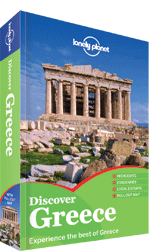 Now that the Greek government has an optimistic outlook on their financial crisis, how can we help them? If you love to travel and explore the world, your next travel destination should be to Greece! By traveling to Greece, the employment rate will increase creating more jobs for all those Greeks who have been unemployed in result of the EU crisis. Although Greece has been on a bumpy ride, 2013 has been named a comeback year in Greek tourism! As global citizens, we should help them because there is so much to see and do there. I know many of you have refused to visit because of the euro crisis and believe you may not be able to experience Greece completely but that is very inaccurate! In a question and answer interview published just a few hours ago with the Greek Minister of Tourism, Olga Kefalogianni, he stated that because of the euro crisis, "tourists had a lot of misperceptions about the country because of all the negative publicity". Truth is, explore Greece now because Kefalogianni thinks that "Greeks feel even more hospitable to their visitors" and "they want to show their hospitality and warmth to everyone who choose their country for their vacation. Some last words, do not let this euro crisis stop you from paying a visit because by visiting you are lending a hand in helping them recover from their euro crisis!
"Greece forecasts it will emerge from recession in 2014" BBC News. 10 Oct. 2013. http://www.bbc.co.uk/news/business-24430135
Sachs, Andrea. "Travel Q&A: A conversation with the Greek minister of tourism" 10 Oct. 2013. http://www.washingtonpost.com/lifestyle/travel/travel-qanda-a-conversation-with-the-greek-minister-of-tourism/2013/10/10/6c50ac8c-2c5d-11e3-b139-029811dbb57f_story.html
Friday, October 4, 2013
Greek Shipowners: Buying a Bigger Fleet
Good news in the business side of Greece. Large shipping corporations in Greece, have been able to weather out the worst parts of the economic crisis. Now, they have begun stocking up on new ships purchased with cheap loans from China, and Korea. Greece has one of the largest merchant ship fleets in the world. With an estimated 16% of the world's dry-bulk, and container vessels are owned by Greek corporations. The ship building industry in Greece has made a whopping, $279.5 billion dollars so far this year. By cutting their prices they have been able to compete with other European shipping giants, and still managed to stay in the lead.
 Because China, is competing with their neighbors in Korea, lower costing ships are being purchased. So far this year, Greek shipbuilders have ordered 188 ships from China, and 217 ships from Korea. However, a large portion of the ships remain dry docked, or anchored and are awaiting to be used. Although the situation in Greece looks grim, certain portions of the economy are making a come back. "The Greeks are the world's dominant buyers both in terms of new and used vessels so they are contributing to the glut," said Jonathan Roach, senior analyst at London-based Braemar Securities Ltd.
Paris, Costas. "China Attracts Greek Shipowners." Wall Street Journal. N.p., 30 Sept. 2013. Web. 4 Oct. 2013. <online.wsj.com/article/SB10001424052702
 Because China, is competing with their neighbors in Korea, lower costing ships are being purchased. So far this year, Greek shipbuilders have ordered 188 ships from China, and 217 ships from Korea. However, a large portion of the ships remain dry docked, or anchored and are awaiting to be used. Although the situation in Greece looks grim, certain portions of the economy are making a come back. "The Greeks are the world's dominant buyers both in terms of new and used vessels so they are contributing to the glut," said Jonathan Roach, senior analyst at London-based Braemar Securities Ltd.
Paris, Costas. "China Attracts Greek Shipowners." Wall Street Journal. N.p., 30 Sept. 2013. Web. 4 Oct. 2013. <online.wsj.com/article/SB10001424052702
Friday, September 27, 2013
The German election, the Euro and Greece

The Germans elected a new leader, but what does the people in the country hardest hit by the euro crisis and the subsequent budget cuts feel about that? Experts believe few things will be changed policy-wise, but Merkel's challenge is to gain the trust and approval of the countries that have been hardest hit by the euro crisis.
Germany is one of the countries that have tackled the euro crisis best, and the German people recently reelected Angela Merkel's party CDU for another four-year term, meaning she will most likely remain chancellor through this term. What does this mean for the euro and particularly Greece? On an election tour last month, Dr. Merkel stated, “the crisis emerged over many years, through founding errors in the euro. For example, Greece should not have been admitted into the euro area.” [1] While this was the last of many statements that provoked the Greek, it must also be seen in the context that it was said. The German people feel that they are the ones that have to pay to bail out Greece, so the statement must also be seen as a strategic move. Either way, Dr. Merkel’s success in leading Germany through the euro crisis is a big reason why she and her party got reelected.
So while Merkel points to Greece and its mismanagement of budgets as a big part of the reason why the euro crisis happened, the Greek sees her as a symbol of budget cuts demanded on Greece [2] and given that Merkel will remain chancellor, the German policy towards Greece will most likely remain mostly unchanged, which means that Greece is expected to keep public spending down until its economy have recovered sufficiently.
Greeks also see Merkel as trying to conquer what was lost after World War II, which can be seen in demonstrations across the countries that have suffered most from public budget cuts such as Greece, Italy and Spain, where protesters and news media some times have used images that depicts Merkel as Hitler to show their dismay with her politics.
Analysis
Analysis
The challenge for Merkel in the next four years will be to balance the fragile relationship between trying to stabilize the euro, create trust from and help the bankrupt EU countries to rebuild their economies, public sector and job markets, while at the same time, avoiding giving them too many bailouts as this angers citizens of the wealthier EU countries.
Sources:
Savaricas, N. (2013, August 28). Angela Merkel says Greece should never have been allowed to join the euro - Business News - Business - The Independent. The Independent | News | UK and Worldwide News | Newspaper. Retrieved September 27, 2013, from http://www.independent.co.uk/news/business/news/angela-merkel-says-greece-should-never-have-been-allowed-to-join-the-euro-8788435.html
image: http://www.businessinsider.com/photos-protests-in-spain-and-greece-2012-9?op=1
Interesting reading:
http://globalpublicsquare.blogs.cnn.com/2013/09/21/will-merkel-practice-what-she-preaches/
Friday, September 20, 2013
The Greek Debt: Where it All Began
Now you may wonder where Greece’s debt may be coming from.
Just like how debt works, Greece ended up spending more than they had. As
Greece changed their currency from the drachma to the euro, Greece had high
expectations to live up to the other 16 prosperous countries in order to enter
in the European Union (EU).
In 2004, Greece was graced with the opportunity to host the
2004 Summer Olympics. Now with the expectations of topping the previous hosts
of the Olympics, Greece dropped a heaping $11 billion (US dollars). But what
sank the economy were the country’s “early retirement age, generous benefits,
and mass tax evasion”. With taxes unpaid, the government turned European banks
to borrow money.

Why is Europe so worried about Greece?
With Europe not as financially stable as they used to be,
Greece’s failing economy would be too much for the EU to handle. It would
affect the currency and all the countries using the euro.
Why won’t the Greeks let the EU bail them out?
Bailout would mean the European banks take out “50 cents for
every dollar owed” by the Greeks. But a bailout would mean Greece would not
have the benefits they are enjoying now, and their economy would also shrink.
Is Greece’s debt cut in half worth all the riots that may ensue if the Greeks
are cut off from their benefits? Who knows? All we know is the world does not
need another country headlining “Riots
Take Over.”
Citations:
Kreig, Gregory J. (2011, November 4). Web. Retrieved from http://abcnews.go.com/blogs/headlines/2011/11/an-idiots-guide-to-the-greek-debt-crisis/
Coppola, Frances. (2012, November 22). Web. Retrieved from http://euronomist.blogspot.com/2012/11/what-will-happen-to-greek-debt.html
Friday, September 13, 2013
The Greek Public Sector Explained
Over the last years the Greek public sector has increased dramatically, both in the General Government and at the various Municipalities. That is because, over the last generations, the base of political power in Greece was providing public sector jobs in the exchange of votes. Every new government hired its own people in the public sector enlarging it more that it can afford.
Wages in the public sector were one and a half times higher than the private ones in average, including extra pensions and huge retirement’s benefits. Tax payers had to pay wages for an excessive number of employees, their huge (and completely unreasonable) extra pensions. The most important fact to mention is that the public sector did not return the equivalent productivity - if any - back to the market causing a gap in the economy. This gap is the major contributor of Greece’s excessive public debt.
The Troika (Greece’s creditors) made a condition for providing grants the layoff of employees of the public sector, though there have not been any significant changes. For every seven workers fired from the private sector only one is fired from the public. According to recent findings if the number of people laid off in public sector was doubled in years 2011-2012, the enormous taxation measures and painful cuts in salaries could have been avoided and in fact Greece could have achieved a surplus in 2012.The problem now is that the private sector has been utterly damaged over the years so it cannot absorb the fired work force from public sector, so now the outcome would be a great increase of the unemployment rate.
The change is yet to be seen…
Words cited
1. Sfakianakis, J.,(2012, October 10) . The Cost of Protecting Greece’s Public Sector.NYTimes.com. Retrieved from http://www.nytimes.com/2012/10/11/opinion/the-cost-of-protecting-greeces-public-sector.html?_r=0.
2. Buiter, W., Rahbari, E. (2010, September 7). Greece and the fiscal crisis in the EMU.Willembuiter.com. Retrieved from http://www.willembuiter.com/Greece.pdf
Subscribe to:
Posts (Atom)